Bac water is bacteriostatic water: sterile water with benzyl alcohol as a preservative. This guide compares its label with sterile water and saline labels, including their storage rules.
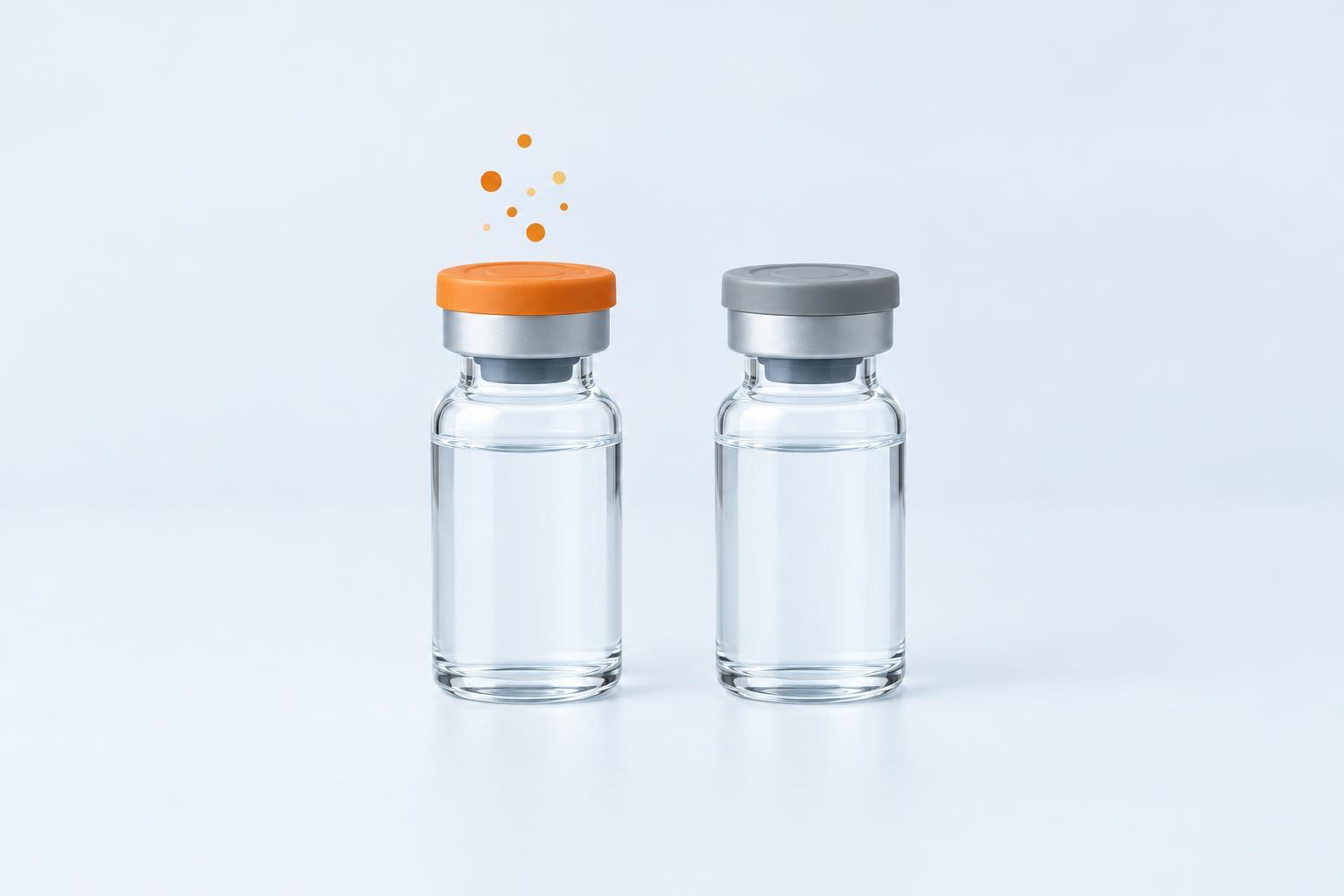
Bacteriostatic Water for Injection, USP is a sterile, nonpyrogenic water for injection with benzyl alcohol added as a bacteriostatic preservative. It comes in a multiple-dose container "from which repeated withdrawals may be made"[1].
The label limits its use to "diluting or dissolving drugs for intravenous, intramuscular or subcutaneous injection"[1]. Other labelers sell versions with only the 0.9% strength, so read the label on the vial you have.
A freeze-dried vial that is drawn from several times gets its stopper pierced again and again. The preservative in bacteriostatic water is there so the diluent vial itself can be entered repeatedly; plain sterile water is supplied only in single-dose containers and contains no bacteriostat[2]. Whether a given peptide may be mixed with bac water is a question for that product's own label: the bac water label says to "consult the manufacturer's instructions for choice of vehicle" and warns that some drugs may be incompatible in a given vehicle[1].
| Solution | Contents | Dose type | Labelled use | Label |
|---|---|---|---|---|
| Bacteriostatic Water for Injection | Water for injection + 0.9% or 1.1% benzyl alcohol | Multiple-dose | Diluting or dissolving drugs for IV, IM or subcutaneous injection | DailyMed[1] |
| Sterile Water for Injection | Water; no bacteriostat, antimicrobial agent or added buffer | Single-dose; "Discard unused portion" | Diluting or dissolving drugs for IV, IM or subcutaneous injection | DailyMed[2] |
| 0.9% Sodium Chloride Injection | 0.9% sodium chloride; no preservatives | Single-dose; "discard unused portion" | Diluting or dissolving drugs for IV, IM or subcutaneous injection | DailyMed[3] |
| Bacteriostatic 0.9% Sodium Chloride | 0.9% sodium chloride + 0.9% benzyl alcohol | Multiple-dose | Diluting or dissolving drugs | DailyMed[4] |
What each FDA-approved label says. Each row links to the label we read.
Sterile water for injection. The key difference is the preservative. Sterile water has none and its label says "Do not reuse single-dose containers"[2]. Whether you can put sterile water into a peptide vial depends on that product: one FDA-approved freeze-dried product, tesamorelin (EGRIFTA), is labelled for reconstitution with sterile water only[5].
Sodium chloride (saline). Saline is salt water, not plain water. Bac water is not the same as saline, though a bacteriostatic saline also exists. None of the labels we read address mixing bac water with saline; each one points back to the instructions of the drug being mixed.
Is "reconstitution solution" the same thing? "Reconstitution solution" is not a product name on any of the labels above. Read the ingredient list on the bottle: whether it has benzyl alcohol, sodium chloride or neither tells you which of these it is.
The water you add sets the concentration. It does not change how much peptide is in the vial. Concentration = mg in the vial ÷ mL of water. For a 10 mg vial, the arithmetic looks like this:
| Water added | Concentration | Peptide in the vial |
|---|---|---|
| 1 mL | 10 mg/mL | 10 mg |
| 2 mL | 5 mg/mL | 10 mg |
| 3 mL | 3.33 mg/mL | 10 mg |
Same 10 mg vial, different water volumes. Arithmetic only, not a recommendation.
The bac water label says the volume used depends on "the vehicle concentration, dose and route of administration as recommended by the manufacturer" of the drug[1]. To turn your own numbers into syringe units, use the peptide calculator.
Unopened bac water. The Hospira label says "Store at 20 to 25°C (68 to 77°F)"[1]. Sterile water from another labeler is labelled 2°C to 25°C[2], so check your own bottle.
After first use. The bac water label we read gives no number of days for use after the vial is first entered. It says to use aseptic technique for every entry and withdrawal[1].
A mixed peptide vial. Storage after mixing is set by the peptide product's own label, and it varies. For example, the EGRIFTA label says to use the solution immediately, discard it if not used, and not to freeze or refrigerate it[5]. For peptides with no approved product there is no label, and we have found no published stability data.
Direct answers to what people search for. Bracketed numbers point to the sources at the end; the sections above have the detail.
Sterile water for injection with benzyl alcohol as a preservative: 0.9% (9 mg/mL) or 1.1% (11 mg/mL) on the Hospira label[1].
No. Bac water is water plus benzyl alcohol. Saline is 0.9% sodium chloride; a bacteriostatic saline with benzyl alcohol also exists[4].
The Hospira label says 20 to 25°C (68 to 77°F)[1]. Follow the label on your own vial.
The label describes bac water as a sterile, nonpyrogenic preparation[1]. We do not give a recipe for making it.
There is no single answer; the amount sets the concentration (10 mg in 2 mL = 5 mg/mL). The product's own label decides the volume. The calculator does the math for the numbers you have.