PeptMentor
CalculatorsHow we source
PeptMentor
PeptMentor
Peptides
Eloralintide
Retatrutide
GHK-Cu
Pinealon
KPV
KLOW
All peptides
Compared
Eloralintide vs cagrilintide
Eloralintide vs retatrutide
Retatrutide vs tirzepatide
Guides and tools
Bac water for peptides
How to reconstitute peptides
Peptide reconstitution calculator
All guides
About
How we source
About
Editorial policy
Open the peptide calculator
PeptMentor

Plain answers about peptides and GLP-1 medicines. Every figure links to its source and says what kind of study it came from.

No dose advice. No sponsors, sellers or affiliate codes.

Peptides

  • Eloralintide
  • GHK-Cu
  • KLOW
  • KPV
  • Pinealon
  • Retatrutide
  • All peptides

Compare

  • Eloralintide vs cagrilintide
  • Eloralintide vs retatrutide
  • Retatrutide vs tirzepatide

Guides and tools

  • Peptide reconstitution calculator
  • Bac water for peptides
  • How to reconstitute peptides
  • All guides

About us

  • About
  • How we check facts
  • Editorial policy
  • Sources
  • Contact
© 2026 PeptMentor LLC. For information only, not medical advice. In an emergency call 911.
Medical disclaimerTermsPrivacyConsumer health data
  1. /Home
  2. /Blog
  3. /How to reconstitute peptides
Guide

How to reconstitute peptides

Reconstituting means dissolving a freeze-dried powder in liquid. These steps cover mixing and checking the vial; your product label decides the liquid, volume and storage.
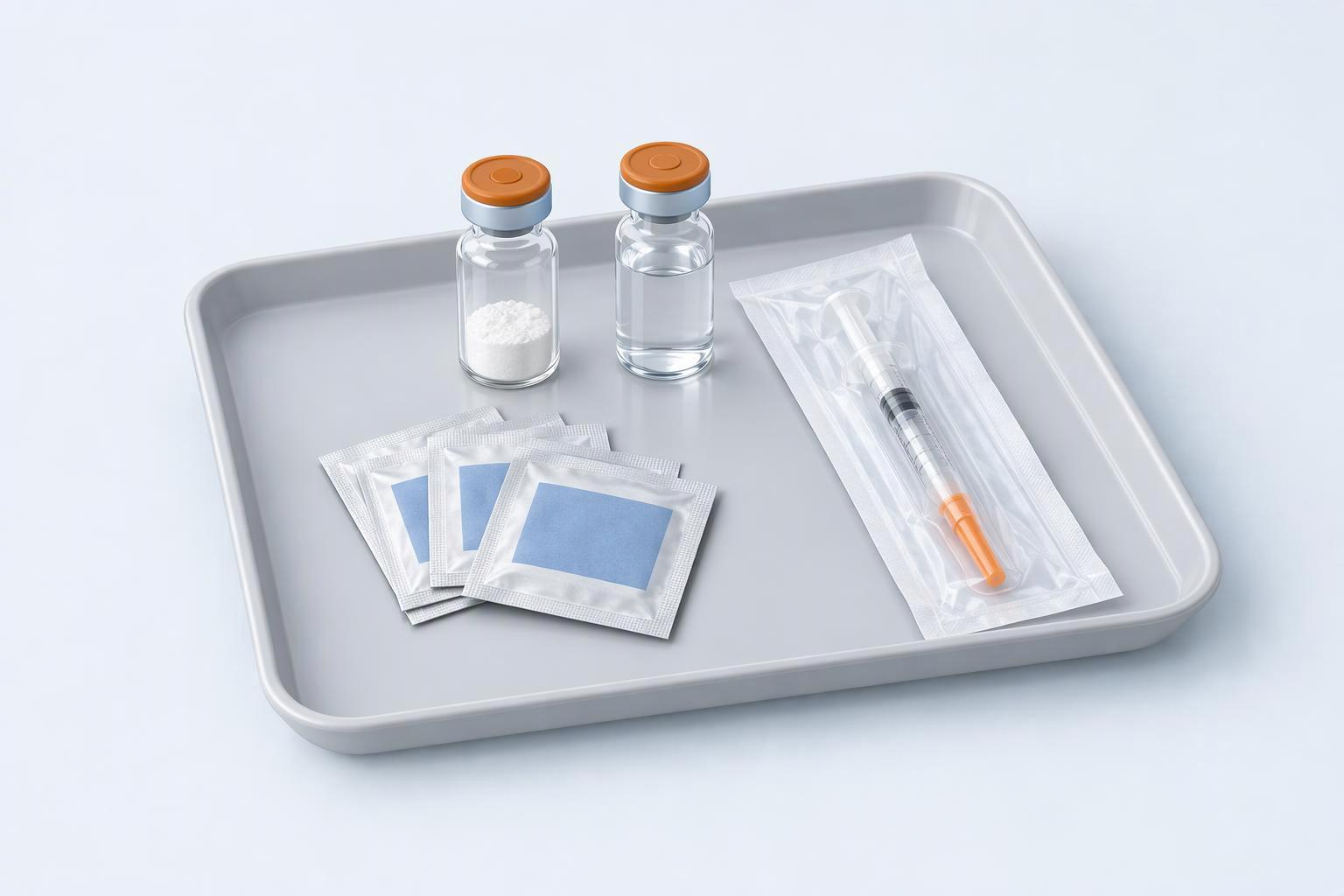
Illustration of a tray with a vial of powder, a vial of liquid, a sealed syringe and alcohol swabs
Illustration

Facts checked 2026-11-17 · by PeptMentor Team · How we source

On this page
Steps to reconstitute a peptide vialWhat reconstituting meansWhat you needHow much water to addAfter mixing: storage and labellingCan you mix two peptides in one vial?How to reconstitute peptides: questions people askSources

Steps to reconstitute a peptide vial

Where these steps come from
Each step is taken from the Instructions for Use of an FDA-approved freeze-dried peptide product[1]. That product is mixed with sterile water and used at once; yours may differ. Where your product label says something else, follow your label.

Emergency: call 911 (or your local emergency number). Possible overdose or wrong amount: Poison Help, 1-800-222-1222, free and open 24 hours. Report a bad reaction to the FDA through MedWatch.

  1. Read the vial and diluent labels

    Check which liquid and how much of it your product label calls for. The bac water label itself says to "consult the manufacturer's instructions for choice of vehicle, appropriate dilution or volume"[2]. Do not use a vial after its expiration date[1].
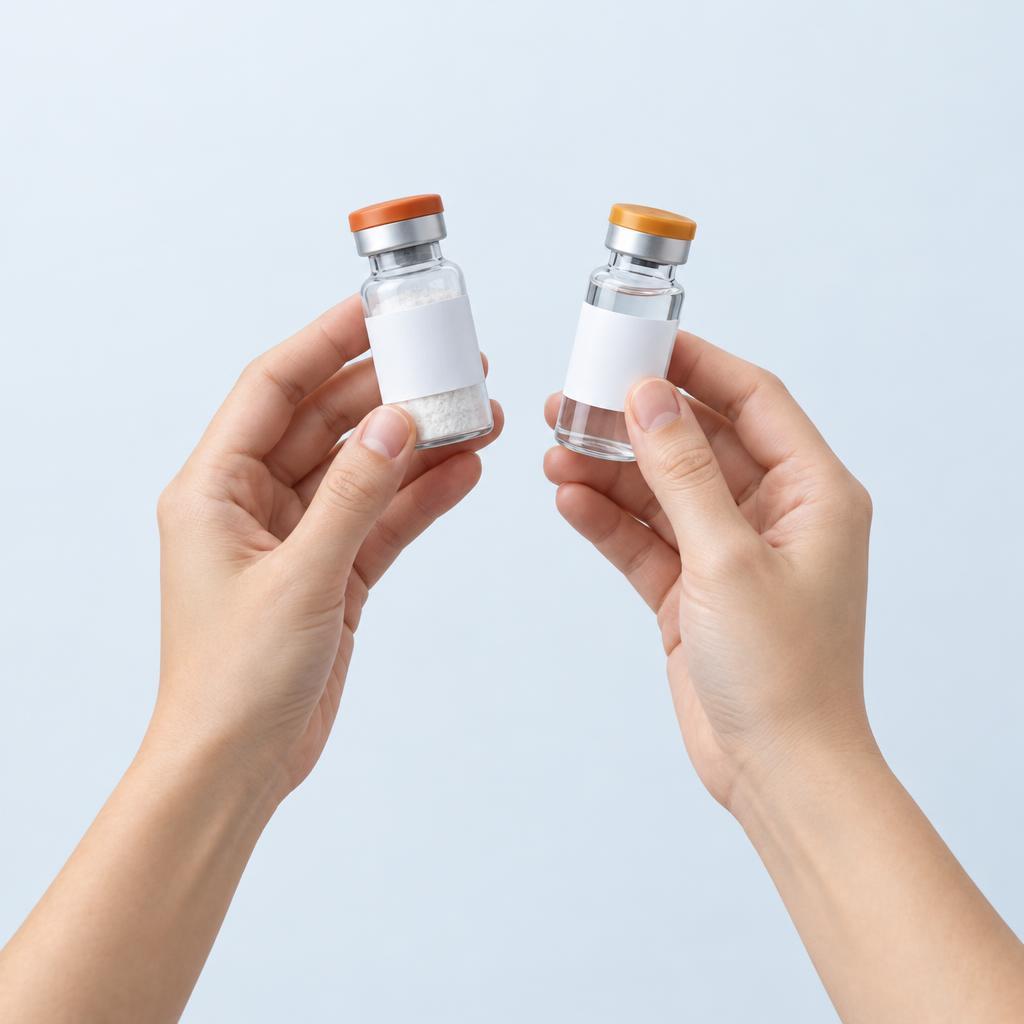
    Hands holding a vial of powder and a vial of liquid to read their labels
  2. Set up and wash your hands

    Work on a well-lit, clean, flat surface. Wash your hands with soap and water and dry them with a clean towel[1].
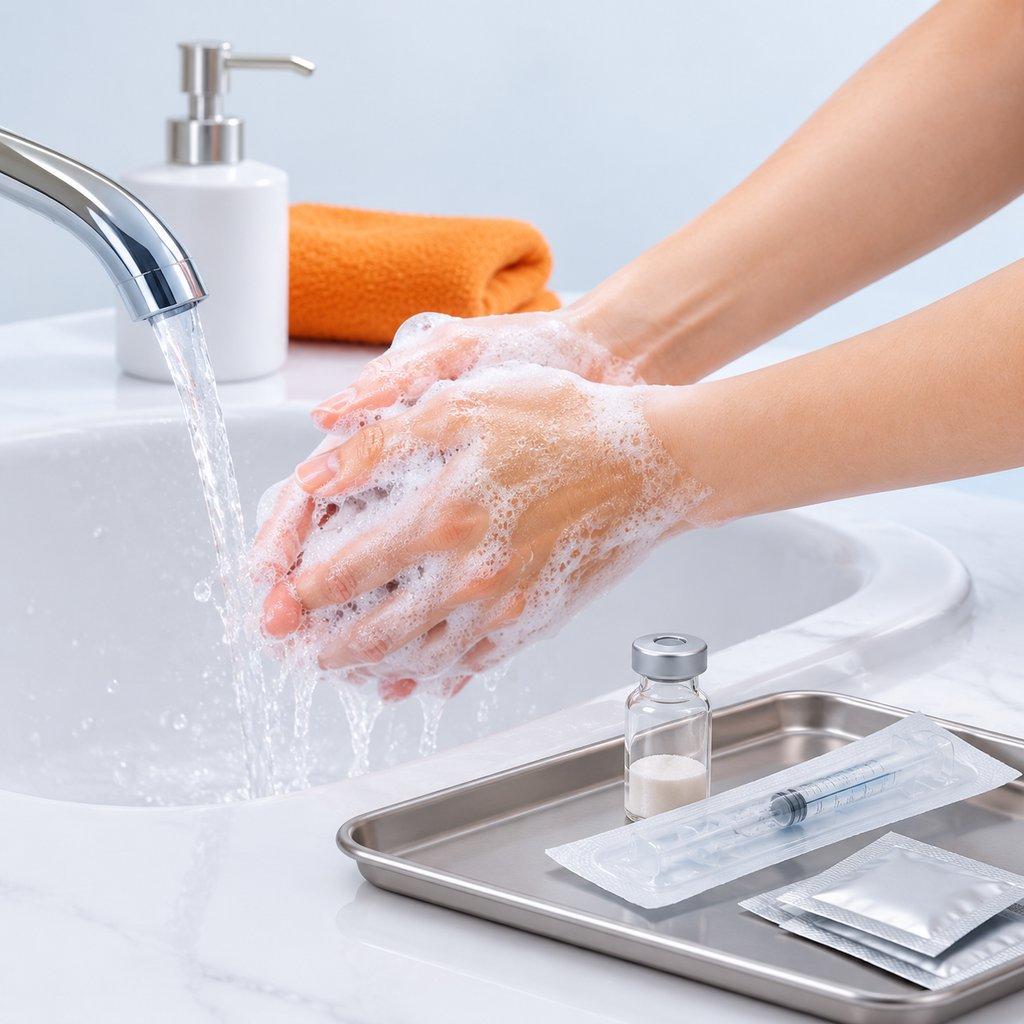
    Hands being washed with soap next to a tray of supplies
  3. Clean the stoppers

    Take the plastic caps off the peptide vial and the diluent vial. Clean both rubber stoppers with an alcohol pad[1].
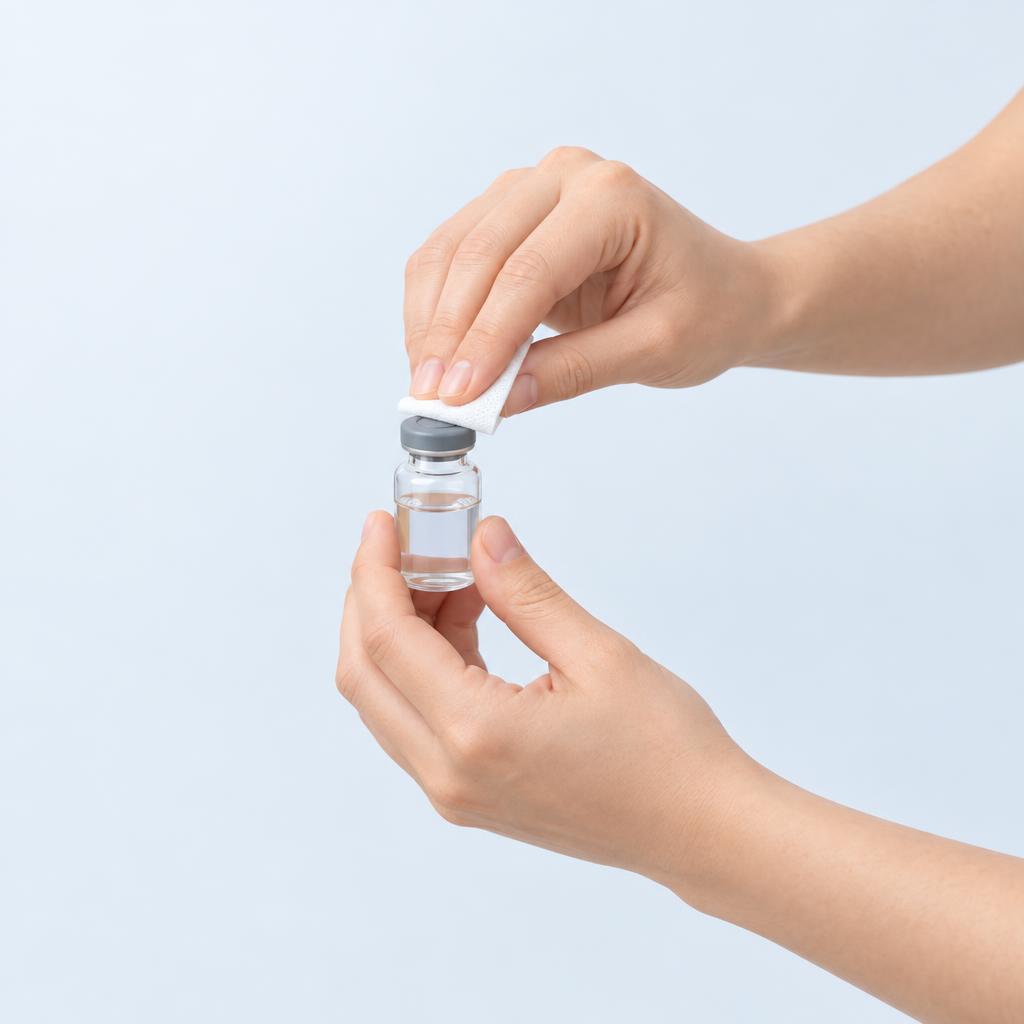
    A hand wiping a vial stopper with an alcohol swab
  4. Draw the diluent

    Use a new, sterile syringe and needle. Push the needle through the diluent stopper, turn the vial and syringe upside down and pull the plunger back to the volume your label states[1]. Use aseptic technique for every entry into a vial[2].
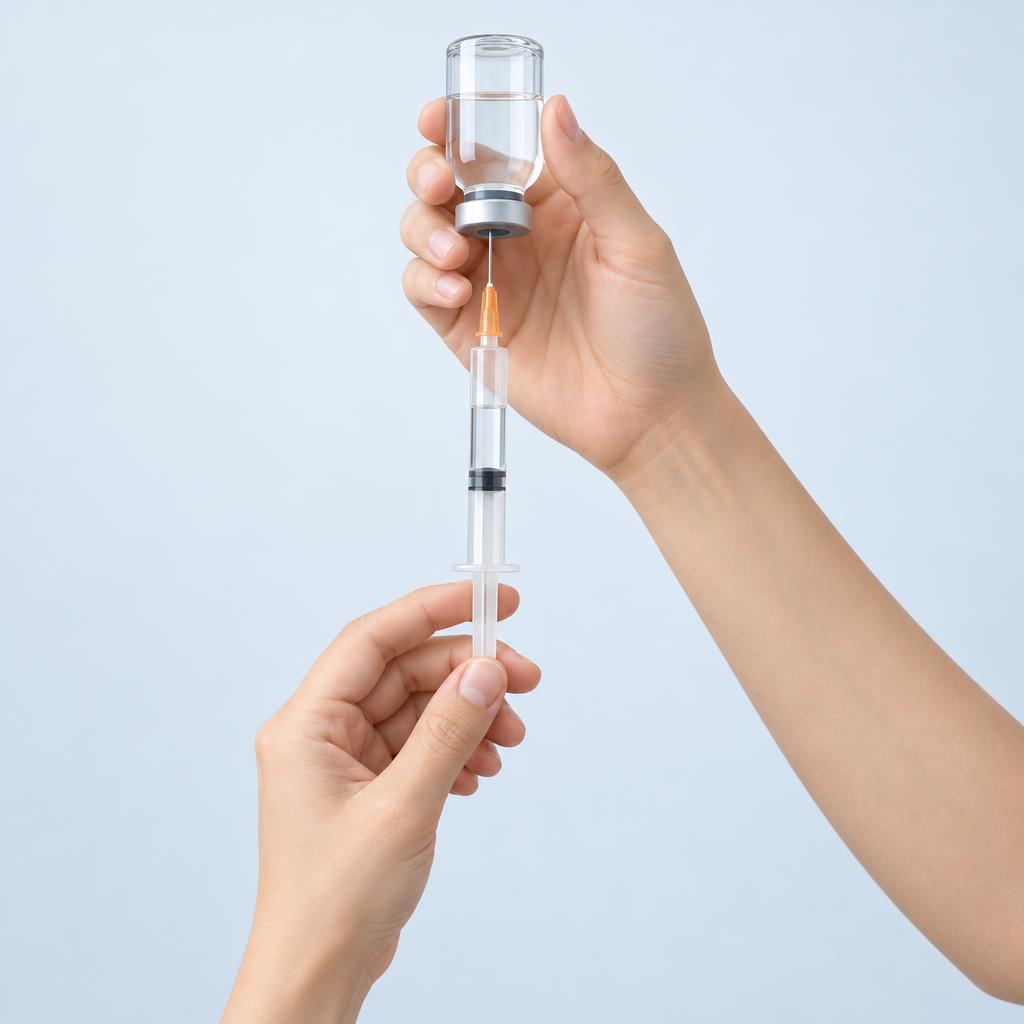
    A syringe drawing clear liquid from an upside-down vial
  5. Add it slowly down the vial wall

    Insert the needle into the peptide vial and push the plunger in slowly at a slight angle, so the liquid runs down the inside wall instead of onto the powder. The IFU says this is "to avoid foaming"[1].
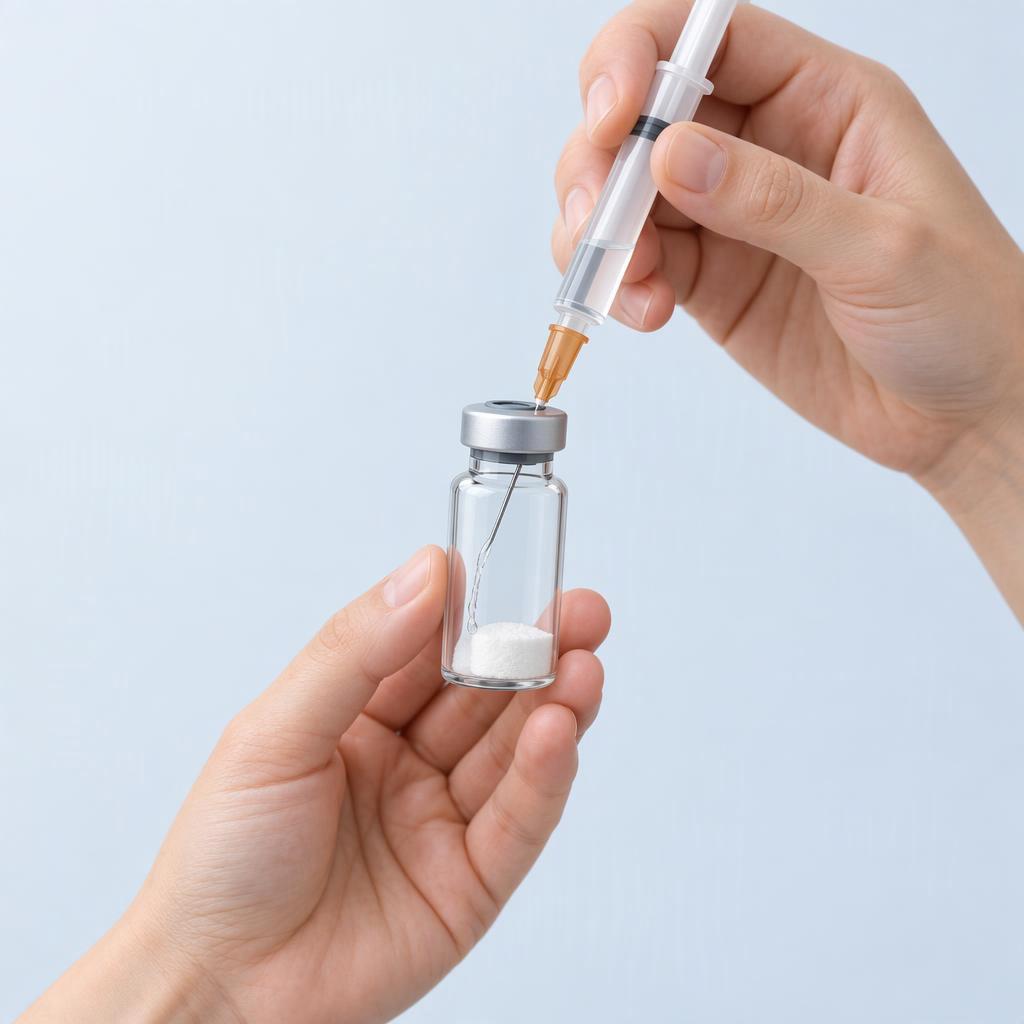
    A needle tip against the inside wall of a vial, liquid running down onto the powder
  6. Roll, do not shake

    Roll the vial gently between your hands until the powder and liquid are mixed. The IFU says 30 seconds for that product and "Do not shake the vial"[1].
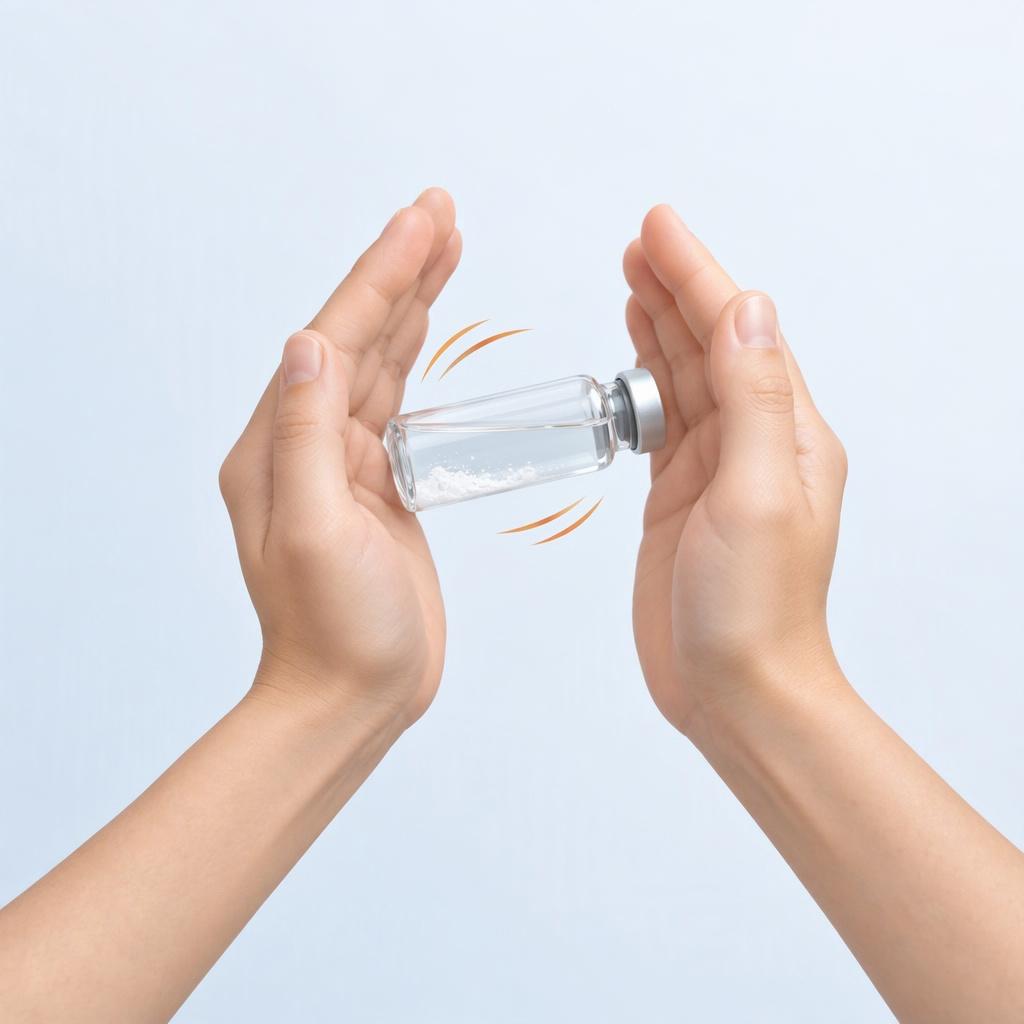
    A vial being rolled gently between two palms
  7. Check the solution

    The solution should look clear and colorless with no particles. The IFU says not to use it if it looks cloudy, discolored or has particles in it[1].
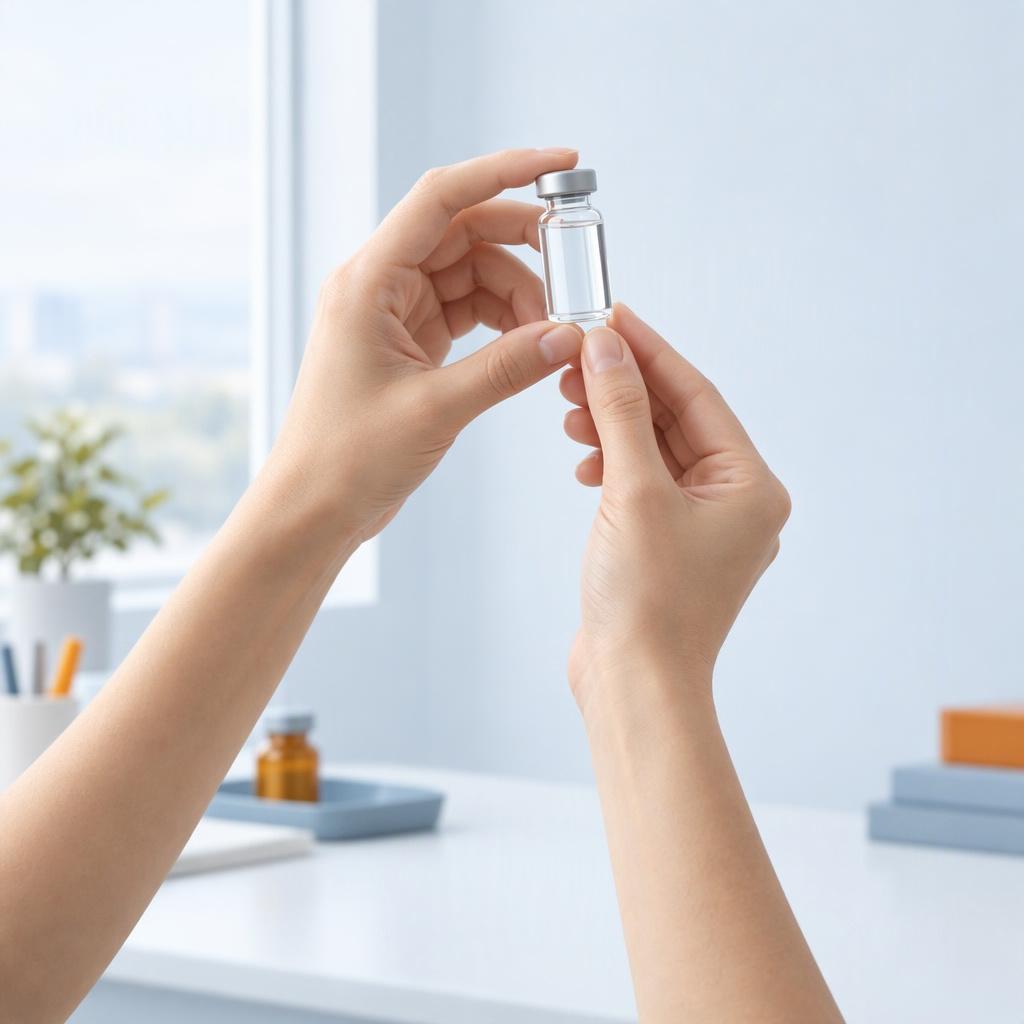
    A vial of clear, colourless liquid held up to the light
  8. Record the mixture

    Record the date, the mg in the vial and the mL you added, so the calculator gets the right concentration later. Storage after mixing comes from your product label (see below).

    An open notebook and pen beside a vial of clear liquid

What reconstituting means

To reconstitute is to add a liquid to a dry powder so it becomes a solution again. The word is used for many medicines, such as antibiotic suspensions. This page covers only freeze-dried (lyophilized) peptide vials.

What you need

  • Diluent. The liquid your product label names. The EGRIFTA label says "Use only the diluent provided, Sterile Water for Injection, USP"[1]. For how bacteriostatic water, sterile water and saline differ, see bac water for peptides.
  • Syringe and needle for drawing the water. There is no single standard. The EGRIFTA kit supplies 1 mL syringes and separate 1-inch 20-gauge needles "used for mixing", plus a different, finer needle for injection[1].
  • Alcohol pads, sterile gauze and a sharps container for used needles and syringes[1].

How much water to add

The volume of water only sets the concentration: concentration = mg in the vial ÷ mL of water. The amount of peptide in the vial stays the same. Use the volume on your product label, then enter it in the peptide calculator to get mL and U-100 syringe units for the amount on your own prescription or label.

After mixing: storage and labelling

How long a mixed vial stays good for is set by each product's label, and labels differ. The EGRIFTA label says to use the solution immediately, discard it if it is not used immediately, and not to freeze or refrigerate it[1].

No stability data for unapproved peptides
Peptides without an approved product have no label, and we have found no published stability data for them once mixed. Claims of a set number of weeks have no source we could find.

Can you mix two peptides in one vial?

We have found no published compatibility or stability data for mixing two peptides in one vial, so we give no combinations. Diluent labels warn that "some drugs for injection may be incompatible in a given vehicle"[2].

How to reconstitute peptides: questions people ask

Direct answers to what people search for. Bracketed numbers point to the sources at the end; the sections above have the detail.

Can I use the same needle to reconstitute and draw from the vial?

The EGRIFTA IFU uses a new syringe and needle to draw the mixed solution and says "Do not use a syringe or needle more than 1 time"[1].

When should I reconstitute peptides?

When your product label says to. The EGRIFTA label has you mix right before use and use the solution immediately[1]; other products may differ.

What if the powder does not dissolve?

The IFU says to roll the vial gently until mixed well and not to shake it. If the solution is not clear and free of particles, the label says not to use it[1].

What if the solution looks cloudy?

Do not use it. The IFU says not to use the solution if it looks cloudy, discolored or has particles[1].

Which syringe should I use for reconstitution?

There is no universal standard; follow your product. The EGRIFTA kit uses 1 mL syringes with 1-inch 20-gauge needles for mixing[1].
Sources

  1. 1.EGRIFTA (tesamorelin for injection) 2 mg vial: prescribing information section 2.2 and Instructions for Use, FDA-hosted (revised 11/2018) Approved label
  2. 2.Bacteriostatic Water for Injection, USP, Hospira (DailyMed label) Approved label
  3. 3.FDA: A Microgram of Prevention Is Worth a Milligram of Cure (updated 05/21/2024) Regulator
On this pageSteps to reconstitute a peptide vialWhat reconstituting meansWhat you needHow much water to addAfter mixing: storage and labellingCan you mix two peptides in one vial?How to reconstitute peptides: questions people askSources